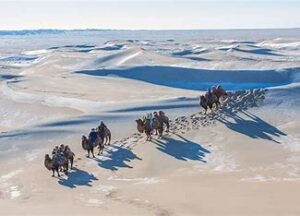

We will recommend 10 most beautiful places for tourists to visit in Ethiopia.
Ethiopia is a land of stunning landscapes, rich history, and diverse cultures.
Here are the ten most beautiful places:
1. Lalibela, Ethiopia:
2. Simien Mountains National Park:
3. Lake Tana:
4. Gondar:
5. Omo Valley:
6. Axum:
7. Bahir Dar:
8. Harar Jugol:
9. Danakil Depression:
10. Debre Libanos:
1. Lalibela, Ethiopia:
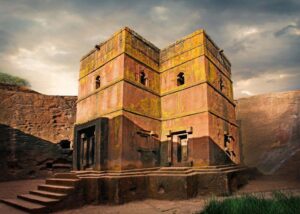
Lalibela is an ancient city in Ethiopia, famous for its brilliant rock-hewn church buildings and rich cultural heritage.
Often called the “New Jerusalem,” it is a UNESCO international heritage site and a huge pilgrimage destination for Ethiopian Orthodox Christians.
The city is famous for its 11 extraordinary church buildings, carved into solid rock during the 12th century beneath the reign of King Lalibela.
Every church boasts its distinct architectural style, showcasing the deep religious roots and exceptional engineering competencies of the time.
The most iconic of those churches, the Church of Giyorgis, is designed within the shape of a cross and, consequently, stands as a fantastic instance of medieval architecture.
Visitors can discover the intricately decorated interiors, which feature characteristic historic paintings and religious artifacts. The environment is serene, with prayers and offerings filling the air every day.
Lalibela attracts thousands of pilgrims each year, especially during Genna, the Ethiopian Orthodox celebration of Christmas, when colourful spiritual ceremonies take place.
In addition to its religious importance, the town is surrounded by breathtaking natural beauty, with rugged hills and lush landscapes. The nearby nation-state gives top-notch hiking opportunities and the chance to connect to the local community.
More than just a religious site, Lalibela is an active cultural hub where visitors can immerse themselves in Ethiopia’s unique traditions and the warm hospitality of its people.
In each way, Lalibela is an unforgettable vacation spot, combining records, spirituality, and natural beauty to offer a genuinely superb experience.
2. Simien Mountains National Park, Ethiopia:
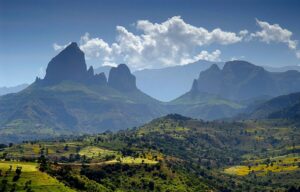
Simien Mountains National Park is one of the most beautiful places for tourists, a panoramic natural marvel situated in northern Ethiopia, renowned for its dramatic landscapes, unique biodiversity, and rich cultural heritage.
Simien Mountains National Park, a UNESCO World Heritage Site, spans over 220 square kilometers and is domestic to several of Africa’s highest peaks, including Ras Dashen, which towers at 550 meters (14,928 feet).
With its steep escarpments, profound ravines, and complete-sized plateaus, the park’s rugged terrain turns it into a paradise for hikers and outdoor enthusiasts.
Several trails offer stunning mountain views and opportunities to spot an abundance of wildlife along the way.
The various parks’ precise inhabitants are the gelada baboon, located only inside the Ethiopian highlands, and, in addition, the significantly endangered Ethiopian wolf, which is one of the rarest dog species in the world.
The park is likewise home to essential plants, which include the towering large lobelias and colourful flowering herbs.
As the seasons exchange, they bring about vibrant sun shades to the landscape; consequently, photographers and outdoor lovers are drawn to it at some point of the year.
Similar to its natural beauty, the park offers a glimpse into the wealthy lifestyle of the surrounding villages, wherein site visitors can enjoy the traditions and everyday existence of the Amhara people. You could also enjoy the warm hospitality and savor traditional Ethiopian delicacies.
Typically, Simien Mountains National Park is an ideal blend of journey, breathtaking perspectives, and cultural discovery.
Whether trekking through its beautiful scenery or observing its uncommon wildlife, a visit to this exquisite park will leave you with unforgettable memories.
3. Lake Tana, Ethiopia:

Lake Tana, the largest lake in Ethiopia, is located within the northwest part of the country and holds splendid significance both for its natural beauty and cultural history.
Spanning about 673 rectangular kilometers, it is widely known for its adorable landscapes. In addition, it boasts numerous natural wonders and enormous ancient significance.
One of the lake’s most charming features is its numerous islands; moreover, those islands are domestic to historical monasteries and churches, several of which date back to the 14th century.
Key spots like Dek Island, with its monasteries of Ura Kidane Meheret and Kebran Gabriel, offer visitors a hazard to admire stunning frescoes and unique architecture.
These sites are primarily targeted at Ethiopian Orthodox Christians, who visit for both religious and cultural motives.
Lake Tana is also a haven for birdlife, which includes pelicans and many migratory species.
The lake is rich in fish, which is vital to the community. At the same time, the encompassing wetlands offer a habitat for a variety of plants and animals; as a result, they assist in keeping a healthy ecosystem.
Lake Tana has another extraordinary characteristic: it serves as the source of the Blue Nile River, which flows northward to merge with the White Nile in Sudan, making it critical to the vicinity’s water supply.
Travel to Lake Tana offers non-violent boat rides to explore its serene waters and picturesque islands.
With its herbal appeal, deep records, and vibrant local way of life, Lake Tana is an essential destination for anybody travelling to Ethiopia.
4. Gondar, Ethiopia:
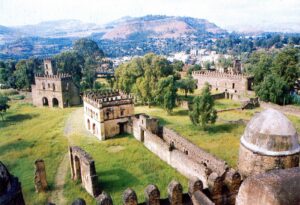
Gondar, frequently called the “Camelot of Africa,” is one of the 10 most stunning places for tourists, a historical city in northern Ethiopia famous for its high-class castles and rich cultural records.
For example, Gondar, founded in the seventeenth century by Emperor Fasilides, served as the capital of Ethiopia for over two hundred years.
Nowadays, it’s a UNESCO international background website online, showcasing the country’s unique architectural history.
The highlight of Gondar is the Royal Enclosure, a collection of castles and palaces, such as the remarkable Fasil Ghebbi.
The site features stunning stonework and towers that blend Ethiopian and European architectural patterns; as a result, it offers a glimpse into the royal lifestyles of Ethiopia’s kings and queens.
Gondar is likewise domestic to many stunning churches, including Debre Birhan Selassie, known for its incredible works of art depicting biblical scenes and saints.
Moreover, the city has bustling markets and a selection of delicious local dishes, along with injera and doro wat, supplying tourists a proper taste of Ethiopian culture.
Nestled amidst lush, green landscapes and the majestic Simien Mountains, Gondar is likewise a terrific vacation spot for outdoor sports like trekking and exploring the natural beauty of the area.
The city’s warm, welcoming people and rich traditions make it a perfect destination for vacationers seeking adventure and cultural immersion.
In every way, Gondar is a fascinating combination of records, culture, and scenic beauty.
Whether exploring its historic castles or savoring local delicacies, a visit to Gondar guarantees an unforgettable experience that showcases Ethiopia’s deep historical past.
5. Omo Valley, Ethiopia:
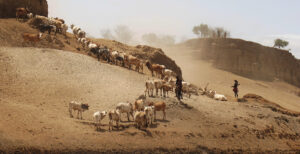
The Omo Valley is one of the 10 most lovable places for tourists, a captivating place in southern Ethiopia, renowned for its beautiful landscapes, several cultures, and rich traditions.
The Omo Valley is undoubtedly one of Africa’s most culturally diverse regions, home to numerous tribes, each with its very own specific traditions, languages, and lifestyles.
The valley boasts dramatic landscapes, with the Omo River winding through lush hills and arid plains.
In truth, the river is a lifeline for local groups, supplying vital water for farming and serving as an essential aid for wildlife.
Tourists to the Omo Valley can immerse themselves in the colorful cultures of the tribes, at the side of the Mursi, who’re celebrated for their precise lip plates, and the Hamar, who’re celebrated for their traditional bull-jumping ceremonies.
Being part of those communities offers a rare opportunity to learn about their customs, artistry, and day-to-day lives.
The location is also rich in flora and fauna, with nearby countrywide parks like Mago and Omo Country Parks, where you could spot elephants, giraffes, and a variety of chicken species.
Those parks are ideal for hiking, natural world watching, and taking in the breathtaking natural beauty of the Ethiopian highlands.
For adventurous tourists, the Omo Valley offers a unique opportunity to explore a remote and culturally rich corner of Ethiopia, affording a chance for discovery and journey.
With its breathtaking landscapes, diverse cultures, and authentic reports, the Omo Valley is a must-visit destination for anyone seeking to experience the heart and soul of Ethiopia.
6. Axum, Ethiopia:
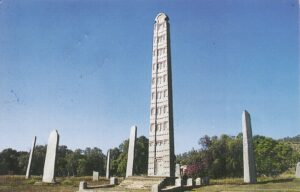
Axum is one of the 10 most beautiful places for tourists, an ancient city in northern Ethiopia, renowned for its rich history and archaeological significance.
Axum, as the capital of the Aksumite Empire, is one of the oldest continuously inhabited towns in the world. Furthermore, it played a pivotal role in early Christian records and became a key center for change in the region.
The city is well known for its towering obelisks and wonderful stone systems from the 4th century AD. A number of these obelisks stand over 20 meters and are intricately carved.
They had been used as markers for royal tombs, symbolizing the strength and wealth of the Aksumite rulers.
The most important of these obelisks, partially restored, showcases the fantastic craftsmanship of ancient developers.
Axum is likewise home to the Church of St. Mary of Zion, a significant site for Ethiopian Orthodox Christians.
It is believed to house the Ark of the Covenant, making it an especially sacred area for many. The city hosts an expansion of non-secular fairs for the year, drawing visitors from around the globe.
In addition to its historic and spiritual significance, Axum offers a glimpse into Ethiopia’s historic exchange routes, which connected Africa, the Arabian Peninsula, and beyond.
The beautiful landscapes, with rocky hills and fertile valleys, add to the location’s charm.
In fact, with its rich history, profound spirituality, and vibrant traditions, Axum is virtually a must-visit destination for anyone interested. in Ethiopia’s history.
As a result, the mixture of historic wonders and vibrant traditions leaves a long-lasting effect on all who visit.
7. Bahir Dar, Ethiopia:
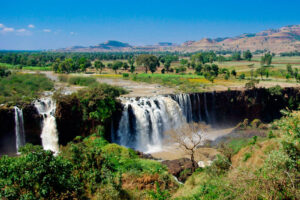
Bahir Dar is one of the 10 most stunning places for tourists, a picturesque metropolis located on the banks of Lake Tana in northern Ethiopia, known for its beautiful landscapes, rich history, and vibrant subculture.
Bahir Dar, the capital of the Amhara region, is an excellent starting point for exploring some of Ethiopia’s most extensive historic and cultural sights.
One of the most essential highlights of Bahir Dar is Lake Tana, Ethiopia’s biggest lake. Similarly, the lake is domestic to over 20 islands, many of which house historical monasteries and church homes.
Site visitors can take boat journeys throughout the serene waters of the lake, where they can observe nearby fishing agencies going about their daily activities.
Bahir Dar is also conveniently located near the Blue Nile Falls, or Tis Issat, which means that the water smokes. Those dramatic falls are remarkably breathtaking for the duration of the monsoon season, because the water plunges into the river below.
The town is known for its fascinating palm-covered streets, colourful markets, and scrumptious close-by cuisine, together with conventional dishes like injera and doro wat.
Site visitors can immerse themselves in the local tradition by interacting with artisans and exploring the bustling environment.
Bahir Dar, moreover, serves as an excellent base for exploring Simien Mountains National Park, a UNESCO World Heritage Site famous for its beautiful landscapes and unique wildlife.
With its unique blend of natural beauty, rich history, and warm hospitality, Bahir Dar is a must-visit destination for anyone traveling to Ethiopia.
Indeed, its combination of adventure, tradition, and scenic attractions ensures an unforgettable experience.
8. Harar Jugol, Ethiopia:
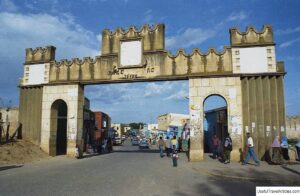
Harar Jugol, the historic walled town of Harar in jap Ethiopia, is a UNESCO World Heritage Site and holds the distinction of being the fourth-holiest city in Islam.
Recognized for its vibrant culture, charming records, and distinct structure, Harar offers visitors a unique experience.
Founded in the seventh century, Harar has long been an essential hub for exchange, culture, and religion. The metropolis is encircled by a sturdy wall constructed in the sixteenth century to shield it from invaders, including those who sought to undermine its ancient significance.
In the walls, the slender streets are covered with conventional homes, which, in addition, feature elaborate timber balconies and colourful facades.
Harar boasts over eighty mosques, several of which might be centuries old, showcasing stunning examples of Islamic architecture.
For example, one of the town’s most fascinating points of interest is the Hyena Man, a local practice where humans feed wild hyenas at night.
This rare and exciting exercise attracts many visitors keen to witness the outstanding bond between human beings and flora and fauna.
The bustling Harar Grand market is a sensory delight, offering a wide range of goods from spices and textiles to homemade crafts.
Harar is also famous for its coffee, a key detail of Ethiopian culture, and tourists can enjoy traditional coffee ceremonies in the city’s comfortable cafes.
Culturally, Harar is rich in poetry and track, reflecting its diverse background. A wide range of ethnic groups live inside the metropolis, and its inhabitants proudly show warm hospitality.
In all, Harar Jugol offers a unique mixture of history, tradition, and nature, making it an unforgettable vacation spot for each person touring Ethiopia.
9. Danakil Depression, Ethiopia:
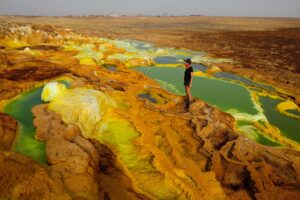
The Danakil Desert, located in northeastern Ethiopia, is one of the most intense and specific places on Earth, attracting tourists.
Regarded for its otherworldly splendor, it’s also one of the freshest places on the planet, with temperatures regularly surpassing 50 degrees Celsius (122 degrees Fahrenheit).
This top-notch region is fashioned using tectonic activity and volcanic eruptions, resulting in a landscape full of salt flats, colourful mineral deposits, and energetic volcanoes.
One of the most spectacular sights is the Dallol crater, wherein sulfur springs and acidic pools display vibrant colors of yellow, orange, and green, developing a scene that looks like something from another planet.
The region is also home to Erta Ale, one of the few continuously lively lava lakes, drawing adventurers and scientists alike to witness its steady fiery spectacle.
The Afar people have lived in the Danakil depression for hundreds of years, adapting to the harsh environment while retaining their rich culture.
Traffic to this extreme landscape can interact with neighborhood communities and learn about their local lifestyles.
10. Debre Libanos, Ethiopia:

Debre Libanos is one of the 10 most lovely places for tourists, a historic and picturesque monastery positioned approximately 110 kilometers north of Addis Ababa, Ethiopia.
Debre Libanos became established in the thirteenth century by way of Saint Abbo and has since become one of the largest religious sites in Ethiopian Orthodox Christianity.
Nestled within the beautiful Ethiopian highlands, the monastery, consequently, gives breathtaking perspectives of the encircling valleys and the Blue Nile Gorge.
The monastery is home to lovely church buildings embellished with elaborate artwork and historic manuscripts, reflecting the rich, inventive, and non-secular history of the place.
The most well-known building is the Church of Saint Abbo, which draws many pilgrims, specifically during some of the most important spiritual festivals.
Debre Libanos also holds historical importance for its role in assisting Ethiopia to withstand overseas invasions.
People widely know the well-known site, Ura Kidane Meheret, for its lovely artwork and ancient importance.
Moreover, visitors to Debre Libanos can walk along peaceful paths through lush landscapes, ideal for birdwatching and connecting with nature.
Simply close by, the Portuguese Bridge, constructed in the seventeenth century, provides a picturesque setting for photographs and serves as a significant ancient landmark.
The warm, welcoming local community further enriches the experience, offering tourists a unique opportunity to engage with traditional Ethiopian culture.
Ordinarily, Debre Libanos combines spirituality, records, and herbal beauty, making it a must-visit destination for all and sundry seeking to explore Ethiopia’s rich spiritual and cultural historical past.
Its serene atmosphere leaves a lasting impression on all who go there.
These great locations spotlight Ethiopia’s terrific natural beauty, deep history, and cultural variety, making it an ever-captivating place. s . to explore.